Developing the state of the art section of the CER: challenges and pitfalls

There is no doubt that establishing state of the art is a challenge. It ranges from key information on the medical condition to a neutral, comprehensive analysis of treatment options, and culminates in a succinct yet comprehensive presentation that defines the currently accepted safety and performance standards against which the device is measured. Not surprisingly, common pitfalls include a perspective that is too broad and inclusion of too much detail, or a perspective that is too narrow, omitting relevant indications and alternative therapeutic options. An important critical aspect of the clinical evaluation that relies on state of the art data is also to appropriately define the position of the device within the currently available treatment portfolio.
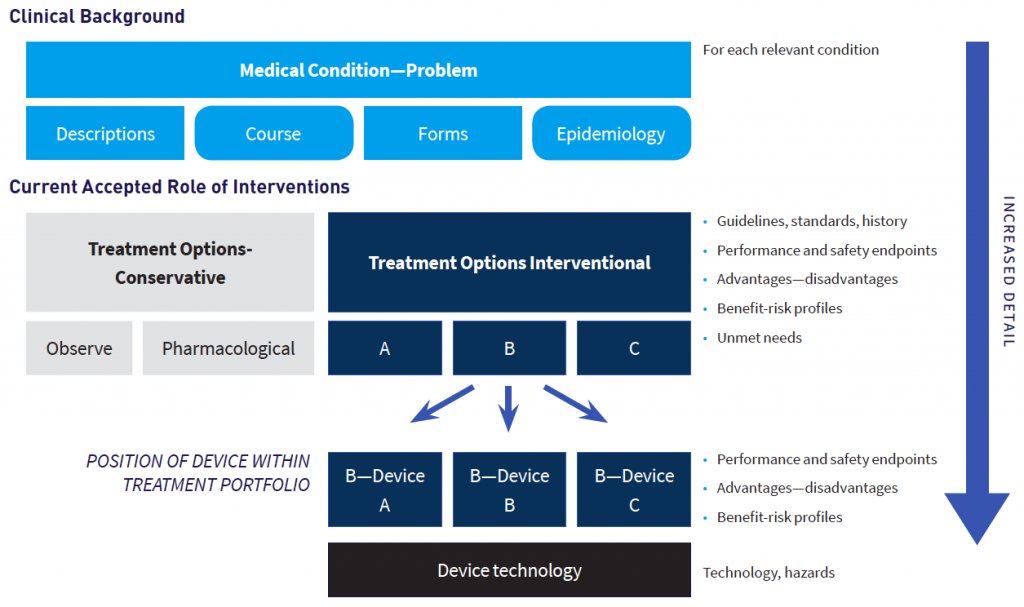
To avoid such pitfalls, it can be helpful to develop a conceptual outline or “anatomy” of the state of the art section early during the review (see the figure below).


If you want to find out more about State of the Art according in MEDDEV 2.7/1 rev 4, you can download our full whitepaper.

TALK TO AN EXPERT

Whether you’re navigating a complex regulatory submission, preparing for an audit, or simply exploring outsourced support — our team is here to help.

Criterion Edge specializes in high-quality, compliant medical writing services for the life sciences industry. Use the form to tell us a bit about your needs — one of our experts will follow up within one business day.

Need a faster response? Use the chat icon in the lower-right corner to speak with us immediately during business hours.

  • No obligation — just an open conversation
  • Expert guidance from PhD-level writers
  • Trusted by leading MedTech & Pharma companies
  • Fast turnaround for time-sensitive projects
  • Clear quotes and scoping available

How Can We Help?

Privacy Overview

This website uses cookies so that we can provide you with the best user experience possible. Cookie information is stored in your browser and performs functions such as recognising you when you return to our website and helping our team to understand which sections of the website you find most interesting and useful.

Read more about our privacy policy here.